Let South Park Tell the Story


In Seattle's South Park neighborhood, residents face some of the city's most serious environmental health inequities. They also lead a remarkable network of community organizations working to address them. When Tegria and the Seattle Kraken's One Roof Foundation began a partnership to support that work, Crown Social produced a short documentary that gave the neighborhood's residents the microphone. The resulting film introduced the partnership through the voices of those with the greatest stake in its future.


A neighborhood with its own story
South Park feels about ten degrees hotter than the rest of Seattle. The land is flat, the Duwamish River runs along its edge, and the neighborhood was once farmland that helped feed the growing city.
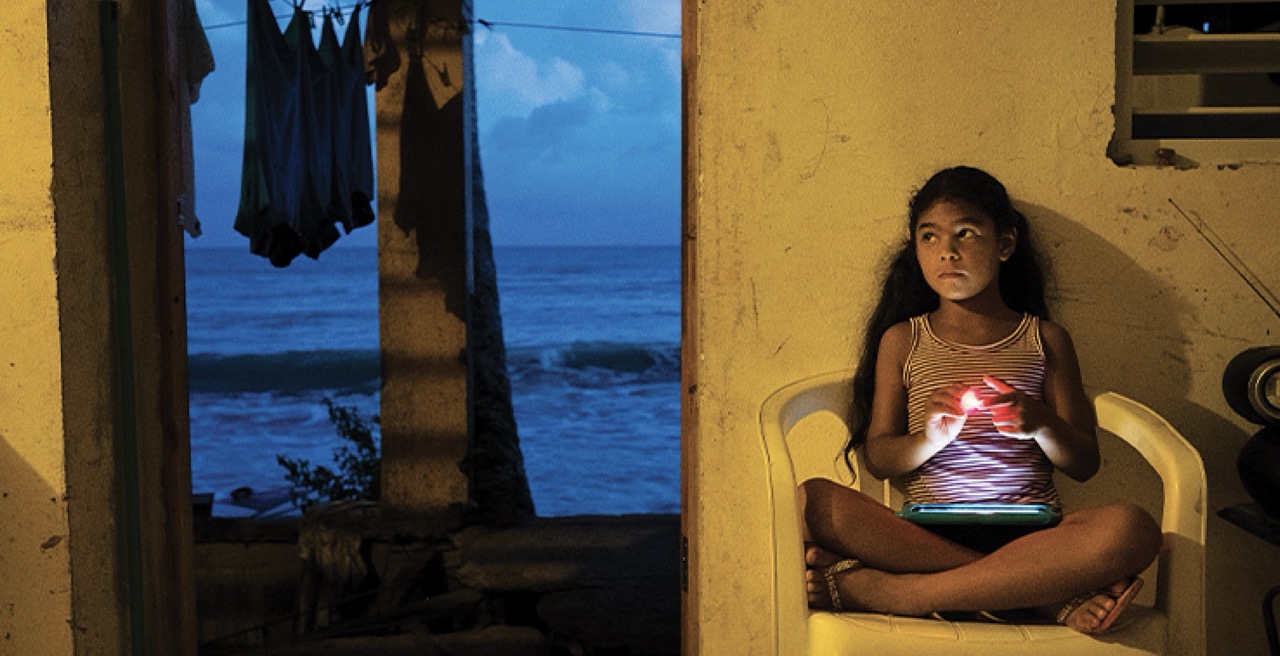
Today, some thirteen languages are commonly spoken here. South Park is home to a large Hispanic community, family-owned restaurants, food trucks, neighborhood festivals, and residents who still gather on their stoops to talk.
Ask the people who live here what South Park means to them, and the answers are personal.
Alexis Sorm talks about feeling heard as a young woman of color. Cunningham Thach talks about expressing oneself through art, poetry, and music. Maggie Angel-Cano talks about home, the youth corps, and the food.
These are the voices that open South Park, a documentary Crown Social Agency produced for healthcare technology company Tegria and the Seattle Kraken's One Roof Foundation.
The two organizations were beginning a partnership to support community health and environmental justice. They needed a film that would introduce that commitment to Seattle.
We thought the best introduction would come from South Park itself.
Thirteen years
The Duwamish Valley was once some of the region's most productive agricultural land. As Seattle industrialized, factories, highways, and freight infrastructure increasingly surrounded a neighborhood that remained residential.
The consequences have been profound.
In the film, One Roof Foundation's Mari Horita describes the convergence of industrial pollution, limited green space, and inadequate recreational facilities. She cites a thirteen-year difference in life expectancy and childhood asthma rates three times higher than those in healthier communities.
The numbers are difficult to reconcile with the warmth and vitality of the neighborhood.
But South Park's residents have spent years organizing around these conditions. The Duwamish River Cleanup Coalition, Duwamish Valley Youth Corps, local businesses, and community advocates have been working to protect the river, create opportunities for young people, and improve the health of the neighborhood.
Tegria and One Roof recognized an opportunity to contribute to that work. Their understanding of health extended beyond medical treatment to include environmental safety, education, recreation, and the well-being of families and children.
For the film, the distinction mattered. South Park was already working toward a healthier future. The partnership was an opportunity to support that ambition.
The people doing the work
Director and cinematographer Lauren Martin led the production, with Crown Social developing the strategy and assembling a team to document the neighborhood through the people who knew it.
The interviews brought together youth advocates, community organizers, neighborhood leaders, and representatives of Tegria and One Roof. We also documented an October 2021 community cleanup, following volunteers as they gathered and worked along the Duwamish.
Early in the film, an organizer calls everyone into a circle.
"The best things happen when we are in circle because we can all see each other."
She thanks the neighbors who organized the event. The group applauds. Then the work begins.
The moment captures something that no sponsorship announcement could adequately explain. South Park has its own leadership, relationships, and way of getting things done.
Our job was to make room for those qualities on screen.
The resulting documentary moves between residents' personal accounts, the neighborhood's environmental history, and the partnership's ambitions. Its photography and interviews keep the story close to the people who live there, while the footage of the cleanup gives those conversations a tangible setting.
There are difficult realities to confront, but also humor, pride, and affection for the neighborhood. The film allows those things to coexist.
Don't forget about us
The completed documentary was released in October 2021, alongside photography documenting the community and its volunteers.
Near the end, Maggie Angel-Cano of the Duwamish River Cleanup Coalition makes a request of the people coming into the valley.
"We are a valley that's pretty tiny, but we have a big voice."
She asks visitors to support the community's work toward a safer environment and to remain involved after the immediate occasion has passed.
"Please remember us. And don't forget about the Duwamish Valley."
It's a fitting ending for a film introducing a new partnership. A neighborhood that has lived with generations of environmental inequity has every reason to ask for a commitment that extends beyond one event.
Tegria and One Roof could offer resources, visibility, and new relationships. Crown Social could document the beginning of that involvement.
South Park's residents had already shown what they were capable of. The film gave them the opportunity to tell the rest of Seattle.
Production credits
As listed in the original film credits.
Direction, production & cinematography: Lauren Martin
Strategy: Mike Reeder
Executive producer: Zach Huntting
Photography: Jordan Nicholson
Assistant camera: Gracelin Moore
Production assistants: Tina Fahnbulleh, Grace Johnson
Sound: Mike Kleven, Eric Reeves
Hair & makeup: Lindsey Watkins
Color: Hans Twite
Featured participants: Coté Soerens (Resistencia Coffee), Mari Horita (One Roof Foundation), Wasif Rasheed (Tegria), Samuel Chesneau (South Park Community Center), Maggie Angel-Cano (Duwamish River Cleanup Coalition), Alexis Sorm and Cunningham Thach (Duwamish Valley Youth Corps).
Captions
South Park is more than a neighborhood. It’s a community with deep-seated character, grit, resilience, and vibrancy at its core, and with 13 languages commonly spoken, and Seattle’s largest concentration of Hispanic residents, it’s extremely diverse.
Residents here can be found on their stoops talking story, or congregating at one of many restaurants, festivals, and food trucks.
If you’re from here you know: it always feels about ten degrees hotter than anywhere else in the city, and with flat, arable land next to the Duwamish river, it was formerly the region’s breadbasket.
Today, the South Park community faces many challenges: air and noise pollution from nearby highways, lack of consistent activities for neighborhood youth, and, for many residents, proximity to contaminated Superfund sites.
These issues coalesce into major health issues such as higher rates of asthma and even lower life expectancies.
But community leaders and residents are making things better.
We’re lucky to have had the opportunity to celebrate South Park, its leaders, community members, stakeholders, and youth in a documentary supported by our clients and partner organizations who are committed to environmental justice and health equity, are focused on overall health in the broadest sense – education, safety, sport, activities, playgrounds, as well as emotional and spiritual health, and understand that the health of our planet – our soil, our water — is inextricably linked to human health, the health of our communities, and especially the health of our youth.