Designing Afterlife’s Seattle nightlife experience
Afterlife was a ten-month Seattle nightlife experiment in which space, sound, projection, performance, and programming worked as one. A close collaboration between CROWN, Ctrl Alt Agency, and Something Forever, the work encompassed brand identity, interior design, merchandise, photography, social strategy, and a website build.


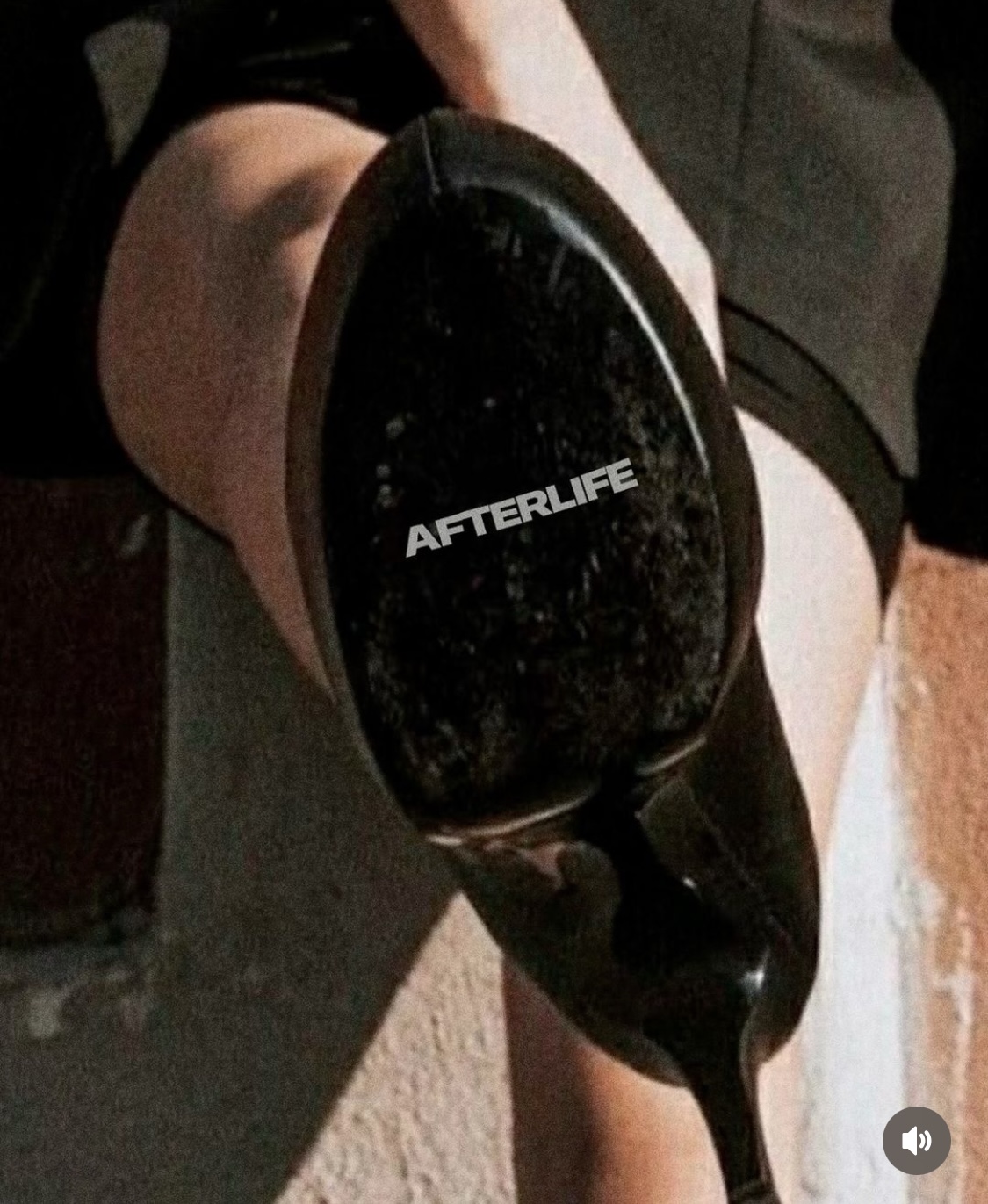


Background
Afterlife was a cultural nightlife experiment that blurred the boundaries between nightlife, performance, and art installation. It was a close collaboration between CROWN, Ctrl Alt Agency, and Something Forever, and it ran from August 1, 2024, to June 1, 2025.
Strategy
Afterlife reimagined nightlife as a form of cultural infrastructure. The space was designed not around tables or stages, but around energy flow — fog, projection, architecture, and sound operating as one.
The creative strategy leaned into the surreal, the sensual, and the supernatural, prioritizing atmosphere over spectacle.
Afterlife wasn’t advertised; it was discovered. Word-of-mouth, thoughtful programming, and immersive interior design created an orbit that invited people to come as someone else for a night—or maybe, more themselves than they could be anywhere else.
Execution
Over its run, Afterlife hosted hundreds of parties and performers including Snow Strippers, Kardano, James Bangura, Just Beige, Ferg F, Suss Out, Physical Therapy, 2Lanes, NYCO, Othrwrld, Mija, Papusa, DJ Memo, Fraya, Reptant, THC.XLR, 360 Ki, blckplms, tondiue!, DJ BZY + Slim, Hausgasm, DJ Deadname, Dingo, Marco Valencia, Ladyisis, Battalica Franca, Como Se DJ, Yama, Dextresse, Cy Hansen, 2ROXIESINTHECLUB, McKnelly, Cria Cuervos, Sloanemotion, DJ Girlfriends, Mia Maya, Snugzception, Mossfet, Dingo, Psygma, IG93, Seelene, Miiju, Casimo, Eve Defy, Joosed, Club Sandwich, Fall, Melfina, Kaviera, Luck Dragon, Shay Rosay, Gwnn, Bobby Gahnoush, Mossfet, It B Like Dat, Harrison Phinney, Nolid, Soraya, Lucky Cheese, Canche Cachetes, Eros, Mimi Zima, Hot & Spicy Disco, Koister, Restless Planet, N3ltron, Quantum, Calico, R_Conna, Marco Valencia, Sethy, Ooms, Nohup, Josiah French, Ephemeral Boy, Ayegy, Internet Tears, Tia Hoang, Fjall, Alexia, NoRecall, James Scott, I.S.H., DJ Mom & Dad, DJ Toya B, Wonder Twinz, Succubass, Mofiya, Dre Lorenz, DJ Libbi, Juan Ogaz, Jelani, Phlatt Phil, Anthony Henderson (Tony H), Wergulz, Koister, Rachel Vick, ROAM(S), DJ Scam, and Ajumma.
Each night transformed the venue into something new — not a bar, not a club, but a portal. A sandbox. A safe space. A living scene built on mutual care, inclusivity, and creative freedom.
Afterlife’s identity is a collision of industrial texture, cinematic light, and unfiltered emotion. It leaned toward the edge of the surreal, inviting people to step outside themselves and into something collective. Each night was a new experiment.
Outcome
In less than a year, Afterlife became a cornerstone of Seattle’s independent culture — a gathering place for artists, outsiders, and dreamers who helped transform a Capitol Hill block into a movement.
It proved that nightlife, when designed intentionally, can function as community architecture: a place to build culture, connection, and memory.
Afterlife was more than a venue. it became shorthand for a kind of culture that Seattle rarely sustains—independent, unpolished, communal, alive.
Captions
Afterlife made room for a different Seattle.
Afterlife operated from
August 1, 2024 to June 1, 2025.
The project was funded by C.S.A.
and developed by Something
Forever, Ctrl Alt Agency, and CROWN.
Afterlife wasn’t advertised;
it was discovered.
Word-of-mouth,
thoughtful programming,
and immersive interior design
created an orbit that invited people
to come as someone else for a night—
or maybe, more themselves
than they could be anywhere else.
Afterlife’s identity is a collision of
industrial texture, cinematic light,
and unfiltered emotion. It leaned
toward the edge of the surreal, inviting
people to step outside themselves
and into something collective.
Each night was a new experiment.