From Cult Product to Scalable Obsession

Exceptional advertising returns demonstrated that a niche creative product could reach a much larger audience. But success in digital commerce didn't guarantee the economics of physical retail. Sporelust tested both propositions. One proved remarkably effective; the other exposed the costs and limitations of translating national demand into local foot traffic. The distinction matters: **proving demand is not the same as proving a business model.**


Chanterelle
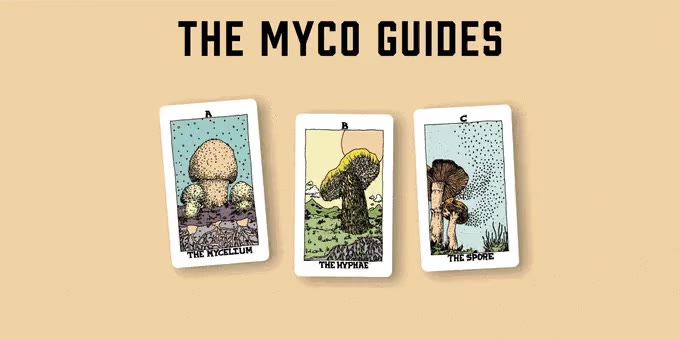
Sporelust! had an engaged audience for its tarot product but needed a clearer path to wider demand. Crown Social Agency tested audiences and creative across paid channels, then connected the findings to campaign planning, creator partnerships, and launch activity.
Amanita Muscaria
The core problem was not product-market fit, but market visibility and audience definition.
Goals:
Identify whether a broader addressable market existed
Establish efficient acquisition channels
Scale revenue without eroding profitability
Success would be defined by:
Sustainable paid acquisition
Proven scalable audiences
Meaningful revenue growth
Golden Oyster
Limited initial ad spend
No validated audience segments
No existing paid media system
Product positioned narrowly despite broader appeal
Need to preserve brand integrity while scaling
Role:
Owned end-to-end growth strategy and execution
Acted as fractional CMO
Led paid media, partnerships, and GTM expansion
Paul Stamets
We rejected the assumption that the audience was limited.
Instead:
Treated the product as under-distributed, not niche
Designed a pilot-first testing model across platforms
Prioritized data over intuition for audience discovery
Key decisions:
Start with constrained spend to validate hypotheses
Test across multiple audience clusters and keywords
Scale only where acquisition efficiency was proven
Chicken of the Woods
The work evolved from campaign to system.
Phase 1:
Rapid pilot campaigns across Instagram, TikTok, and Google
Identification of high-performing audiences and creatives
Phase 2:
Structured scaling model based on performance thresholds
Continuous creative iteration and testing
Phase 3:
Expansion into:
Kickstarter campaign strategy
Influencer and partner ecosystem
Live events and retail launches
This created a repeatable growth engine, not just a campaign.
Jody Hall
Evidence of system performance included:
Pilot campaign validation within one week
Consistent low CPA across multiple audience segments
Repeatable performance across channels
Artifacts:
Multi-platform ad testing frameworks
Audience segmentation models
Creative iteration cycles
Inky Cap
9,800% increase in total online revenue
3x ROAS on core campaigns
4,700% increase in weekly profit
Kickstarter funded at 611%
Paid social achieving 6.83x ROAS during campaign
Beyond metrics:
Proved the existence of a significantly larger market
Enabled expansion into retail and physical locations
Established long-term growth infrastructure
The Marketing Worked. The Retail Model Didn't.
The earliest results were extraordinary. Digital advertising turned a niche creative product into a demonstrably viable commercial opportunity.
We saw the potential for something larger.
Sporelust grew into a retail brand with a physical storefront on Seattle's Capitol Hill, an expanding merchandise collection, and a presence at mushroom festivals and cultural events across the country.
But the economics changed. A national audience that could be reached efficiently through digital advertising did not automatically translate into enough local foot traffic to support a permanent retail operation.
The storefront closed in April 2023.
The experience reinforced a distinction that remains central to our work: evidence that marketing can generate demand is not the same as evidence that a particular business model can sustain it.
Both outcomes were instructive. Only one was financially successful.
Laura Guzmán-Dávalos
Key takeaways:
Demand often exists before it is visible
Paid media is a discovery tool, not just a scaling tool
Systems outperform campaigns
This work became a model for:
Market validation through paid media
Scalable audience discovery
Growth infrastructure design
Captions
Sporelust!
had an engaged audience
for its tarot product
but needed a clearer
path to wider demand.
Crown Social Agency tested audiences
and creative across paid channels,
then connected the findings to campaign planning,
creator partnerships, and launch activity.
Audience and creative tests
informed campaign planning, creator partnerships,
and launch activity for Sporelust!
Testing is useful
when its findings change the next creative
or audience decision.