Making Artificial Intelligence Easier to Understand


As Amazon Alexa expanded beyond the home and into the laboratories of universities and AI researchers, its teams faced a different communication challenge: explaining the science behind a technology most people knew simply as a voice in their living room.
Crown Social Agency worked with Amazon's Alexa AI and Alexa Prize teams on research presentations, competition branding, conference films, product demonstrations, and academic publications. The assignments ranged from executive stages to technical journals, each demanding a different way of making complex ideas understandable.


The science behind the voice
By 2018, millions of people were talking to Alexa. They could ask for the weather, play a song, set a timer, or control the lights without touching a screen.
Behind those ordinary exchanges was an enormous technical undertaking. Alexa had to recognize speech, interpret language, identify what people wanted, and respond appropriately. A simple conversation involved disciplines that researchers had spent decades trying to advance.
Amazon was investing in the people and research behind that progress.
The Alexa Prize brought university teams into an international competition to build conversational AI capable of more natural, sustained dialogue. Its research introduced problems far more difficult than answering a question about the weather.
How could a machine follow an unfamiliar conversation? Recognize a change in subject? Understand the difference between a request and a remark?
And how could the researchers explain those advances to people outside their immediate disciplines?
Crown Social Agency began working with Amazon's Alexa teams in 2018, supporting the materials through which that work was presented, documented, and shared.
Giving the research a public identity
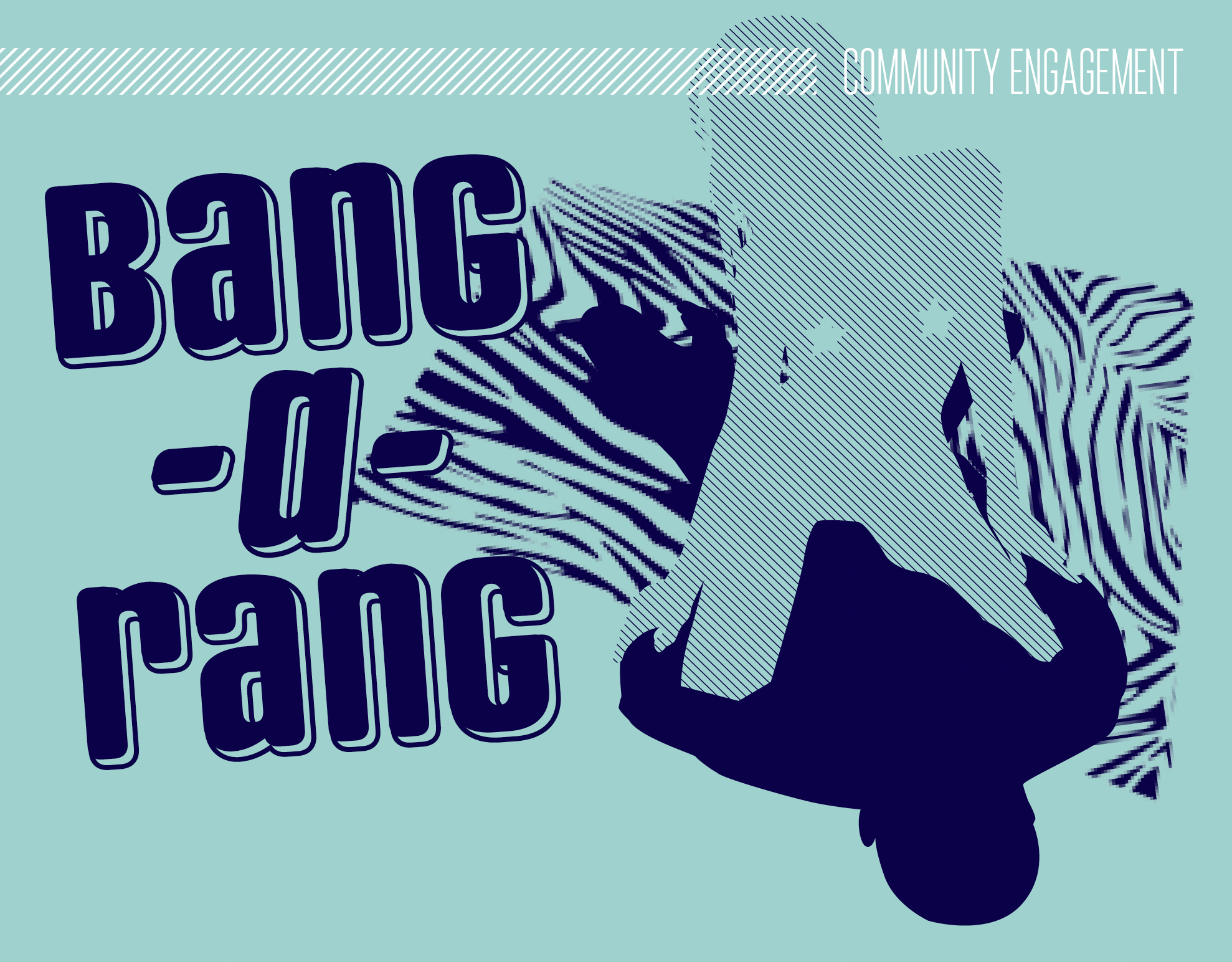
The Alexa Prize Summit brought researchers, students, and Amazon teams together around the competition.
The event needed an identity that belonged to Alexa while distinguishing the research program from its consumer-facing parent brand.
Crown Social explored several approaches to the Summit mark, working with the familiar Alexa speech-bubble geometry. Early concepts included converging speech bubbles, an abstract summit, and a symbol constructed from the Alexa logo itself.
The design process eventually moved toward soundwaves, including an exploration of the actual waveform produced by someone saying "Alexa."
The reasoning was direct. A competition devoted to conversation could use the shape of speech itself as a visual reference.
That identity work extended into event materials, presentations, and supporting graphics.
Crown Social also developed video coverage of the Summit, documenting the researchers and their work through interviews and event footage. The material supported separate editorial treatments, including an interview-focused film and a more atmospheric version designed for potential future promotion.
Additional interviews and footage from Boston broadened the documentation beyond the event itself.
Taking AI research to the stage
In 2019, Amazon introduced re:MARS, a conference devoted to machine learning, automation, robotics, and space.
For Alexa's researchers, the conference offered a public stage for technical work that rarely fits neatly into conventional presentation formats.
Crown Social worked on keynote and breakout-session materials, translating dense research into visual presentations that could be followed during a live talk.
The subject matter ranged from speech recognition and dialogue management to conversational interfaces, acoustic event detection, and emotional intelligence.
Some presentations required architectural diagrams and research findings. Others needed animations, embedded video, or demonstrations that could explain a technical concept more immediately than text.
Even a relatively small decision could carry meaning. In one presentation, Amazon specified blue speech bubbles for Alexa and orange for the person speaking to it. Maintaining that distinction helped audiences follow the exchange.
Crown Social also produced demonstrations of Alexa features at Amazon's Home Studio inside Day One, the company's Seattle headquarters building.
The presentations and films served different purposes, but both addressed the same underlying challenge: making the work legible without losing the technical substance.
Giving the research a permanent record
The Alexa Prize produced substantial research beyond its live events.
Competition proceedings brought together the work of university teams, their technical methods, and their findings. These materials needed the conventions and precision of academic publishing, along with the visual consistency expected of an Amazon publication.
Crown Social supported the design, editing, production, and publication of Alexa Prize research journals, with documented work continuing into 2021.
The production demanded unusually close attention to detail. Technical terminology, university affiliations, team photographs, page references, and publication conventions all required review.
The final documents gave the research an organized record that could be circulated and referenced after the competitions concluded.
Across the research program
Over multiple assignments, Crown Social helped Amazon's Alexa teams present their work in conference rooms, on stage, on film, and in print.
The archive includes research identities, presentation materials, interviews, demonstrations, competition graphics, and technical publications.
Each was designed for a particular audience and occasion. Together, they document a period when the science behind voice assistants was becoming increasingly visible to the world beyond the laboratory.
Metrics / documented scope
No verified reach, adoption, efficiency, or business-performance metrics are currently available.
Captions
By 2018, millions of people were talking to Alexa.
Behind every answer was a remarkable amount of science.
Amazon was working to make those conversations more natural.
And bringing university researchers into the effort.
The Alexa Prize challenged teams to advance conversational AI.
Crown Social helped give that research a public identity.
For the Alexa Prize Summit, we explored a symbol built around speech itself.
Including the actual waveform of someone saying "Alexa."
We documented the researchers and their work through interviews and event films.
In 2019, Amazon introduced re:MARS.
A conference devoted to machine learning, automation, robotics, and space.
Our work moved from competition branding to technical presentations.
Translating complex AI research into materials for live audiences.
Speech recognition. Dialogue management. Emotional intelligence.
Even the colors mattered: blue for Alexa, orange for the user.
We also filmed demonstrations of Alexa features at Amazon's Day One headquarters.
Meanwhile, the Alexa Prize was producing research that needed a permanent record.
Crown Social prepared and published perfect-bound hardcopies of the competition's technical journals over multiple years.
Bringing consistency and precision to hundreds of pages of academic material.
Across events, films, presentations, and publications, we helped give the science a form people could follow.
The research continued. So did the conversation.